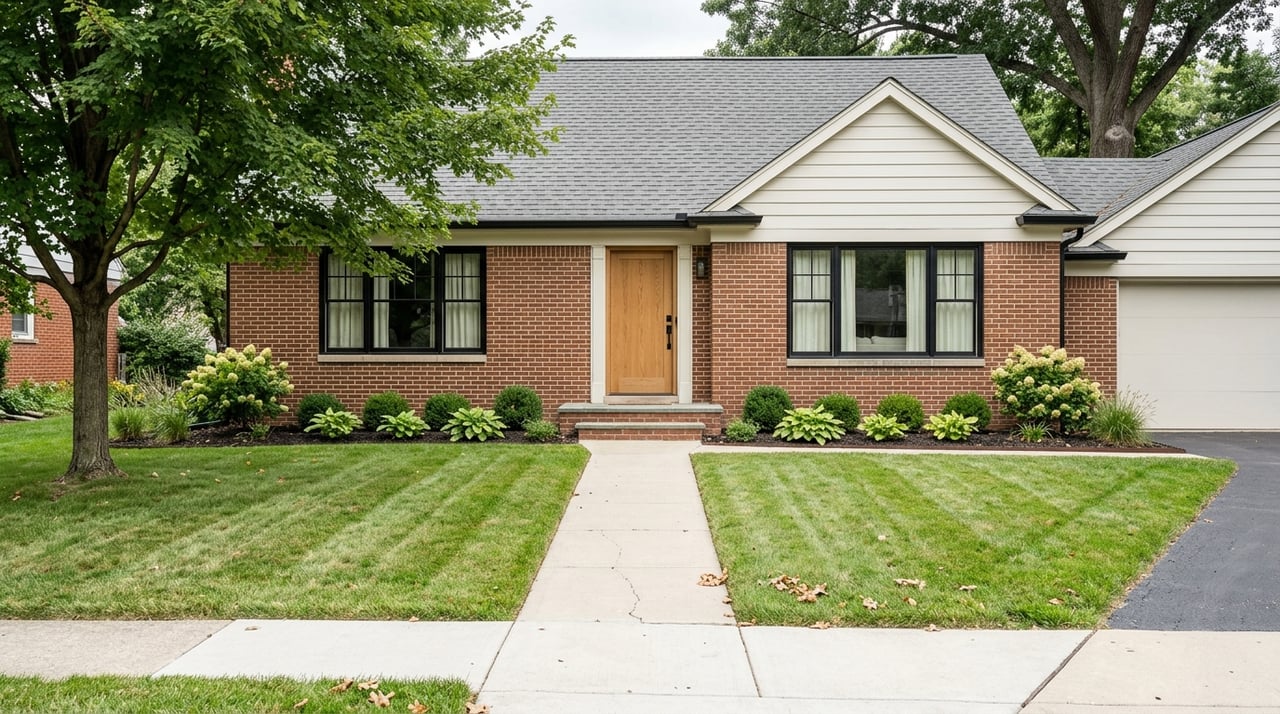
How To Trade Up In Downers Grove Without Overstretching
June 4, 2026
June 4, 2026
Wondering if you can move into a larger home in Downers Grove without ending up house-rich and cash-poor? You are not alone. Many local homeowners have built meaningful equity, but today’s prices, mortgage rates, and property taxes can make a move-up purchase feel riskier than it looks on paper. The good news is that with the right plan, you can trade up in a way that supports your lifestyle and your budget. Let’s dive in.
Downers Grove already works for a lot of homeowners. It is an established DuPage County community with about 49,867 residents, a median household income of $119,649, and a homeownership rate of 75.3%. The local housing stock is still led by detached single-family homes, which helps explain why many owners want to stay in town even as their space needs change.
For some households, trading up means adding a bedroom, a home office, or a larger yard. For others, it means moving to a different part of town with a higher price point. That range matters in Downers Grove, where home values can vary widely by area, from roughly the mid-$200,000s in some pockets to the high-$600,000s in others.
If you want to avoid overstretching, start with the number that affects your day-to-day life most: your monthly housing cost. It is easy to focus on the purchase price, but the monthly carrying cost is what determines whether your next home still feels comfortable six months after closing.
That is especially important in Downers Grove. CMAP reports median monthly owner costs with a mortgage at $2,586, and those costs include more than just the loan payment. They also include property taxes, insurance, utilities, and HOA fees where applicable.
A larger home can change several of those costs at once. Your mortgage may rise, but so can utilities, maintenance, and insurance. If you only budget for principal and interest, you can end up approving a price point that feels fine on paper and tight in real life.
Before you shop, build your ceiling around the full monthly picture:
As a reference point, Freddie Mac reported the average 30-year fixed rate at 6.53% as of May 28, 2026. At that rate, a $600,000 home with 20% down would be about $3,043 per month in principal and interest alone. That does not include taxes, insurance, HOA dues, maintenance, or utilities.
A move-up plan usually depends on equity from your current home. A simple starting point is to estimate your home’s market value and subtract your remaining mortgage balance. That gives you a rough idea of your equity position.
But equity is not the same as cash in hand. Your sale proceeds also need to cover paying off your current mortgage and other sale-related costs. That is why it helps to estimate your likely net proceeds before you start shopping at the top of your comfort range.
Recent market data points to a competitive but price-sensitive environment in Downers Grove. Depending on the source and time period, values and pricing cluster around the high-$400,000s to low-$500,000s, and some homes move quickly. That can create opportunity if you are selling a well-positioned home, but it also means your next purchase may require quick decisions.
When you know your likely net proceeds, you can make better choices about your down payment, reserves, and target price range. That keeps you from using all of your equity on the purchase and leaving too little room for repairs, moving costs, or a timing gap.
Property taxes deserve special attention in Downers Grove because they are address-specific. The Village states that tax bills are issued by DuPage County on or about May 1 for the prior tax year, and those bills are made up of multiple local levies, including county, township, village, library, fire district, park district, and school districts. The DuPage County Clerk calculates the rates.
In plain terms, two homes with similar prices may not carry the same tax bill. That is one reason move-up buyers can feel surprised after they go under contract. A home that looks manageable at list price may land very differently once taxes are added into the monthly payment.
When you compare two possible homes, do not stop at list price. Compare the estimated full monthly cost at each address. In Downers Grove, that is often the clearer way to judge affordability.
Many move-up purchases in Downers Grove may still fit within conforming loan limits, but you should not assume. The FHFA set the 2026 baseline conforming loan limit at $832,750 in most of the U.S. Since many local home values sit below that level, a conventional loan may still work for a wide range of trade-up scenarios.
That said, your exact financing depends on the specific purchase price, your down payment, and your overall financial profile. If you are stretching into a higher-priced part of Downers Grove, confirm the numbers early so there are no surprises later.
A smart move-up plan usually includes:
The biggest stress point for many move-up buyers is timing. Do you sell first and shop second, or buy first and hope your current home sells quickly? The right answer depends on your finances, your risk tolerance, and what inventory is available when you are ready.
If your household has flexibility, selling first is typically the lower-risk option. Once your current home sells, you know your net proceeds and can make decisions from a stronger financial position. That reduces the chance of carrying two housing payments at once.
This approach is often the most practical for buyers who want to stay within a firm budget. It may require temporary housing or a short-term plan between closings, but it gives you clearer boundaries and less pressure.
Sometimes the right next home appears before your current home sells. In that situation, it is tempting to move fast and sort out the details later. That can work for some households, but only if the overlap is truly affordable.
The biggest mistake is assuming your current home will sell immediately and at the number you want. In a competitive market, some homes move fast, but not all homes move on the same timeline.
When you write an offer on your next home, contingencies can protect you. CFPB notes that financing and inspection contingencies are important consumer safeguards. If financing falls through or the inspection reveals serious issues, those terms can limit your contractual exposure.
That matters in a market where multiple offers can happen. A cleaner offer may be more competitive, but stronger protection may be the wiser choice if your finances depend on a careful sequence.
A contingent offer may be realistic, but it depends on the property and the competition around it. In some situations, you may need stronger pricing or cleaner terms to compete. The key is to balance competitiveness with financial safety.
Bridge or swing financing can help if you need to close on a new home before your current one sells. But it is not a casual solution. It is temporary financing that is meant to be repaid after the current home sells, and lenders will look closely at whether you can carry the new home, your current home, the bridge loan, and your other obligations.
That means bridge financing usually makes sense only when your sale timeline is realistic and your cash flow is strong enough to handle overlap. If it only works under best-case assumptions, it may be too aggressive.
Instead of asking, “Can we qualify?” ask, “Will this still feel comfortable if our current home takes longer to sell?” That question often leads to a better decision.
If you want to move up without overstretching, keep your plan simple and disciplined.
Decide what monthly payment still leaves room for normal life, savings, and unexpected costs.
Use your likely sale price, subtract your mortgage payoff, and account for sale-related costs.
Evaluate target homes based on mortgage, taxes, insurance, HOA dues, utilities, and maintenance, not just price.
Check whether your likely purchase fits within conforming limits and your preferred loan structure.
Choose whether selling first, buying first, or using a temporary financing option best matches your risk tolerance.
Do not spend every available dollar on the purchase. Leave room for repairs, improvements, moving costs, and timing surprises.
In Downers Grove, trading up is not one-size-fits-all. A move from one neighborhood to another can mean a very different budget, tax bill, and competition level. That is why local pricing knowledge matters just as much as broad market trends.
A strong plan should account for your current home’s likely sale value, your target areas, and the true monthly cost of the homes you are considering. When those pieces are aligned, you can move up with more confidence and less financial strain.
If you are thinking about your next step, Wardlow Group can help you understand your home’s value, evaluate your options, and identify opportunities, including off-market listings, so your move-up plan starts from solid ground.
Stay up to date on the latest real estate trends.

Property Taxes in DuPage County: What Buyers Must Know
How to Start the Home Buying Process in Downers Grove

Etiam non quam lacus suspendisse faucibus interdum. Orci ac auctor augue mauris augue neque. Bibendum at varius vel pharetra. Viverra orci sagittis eu volutpat.