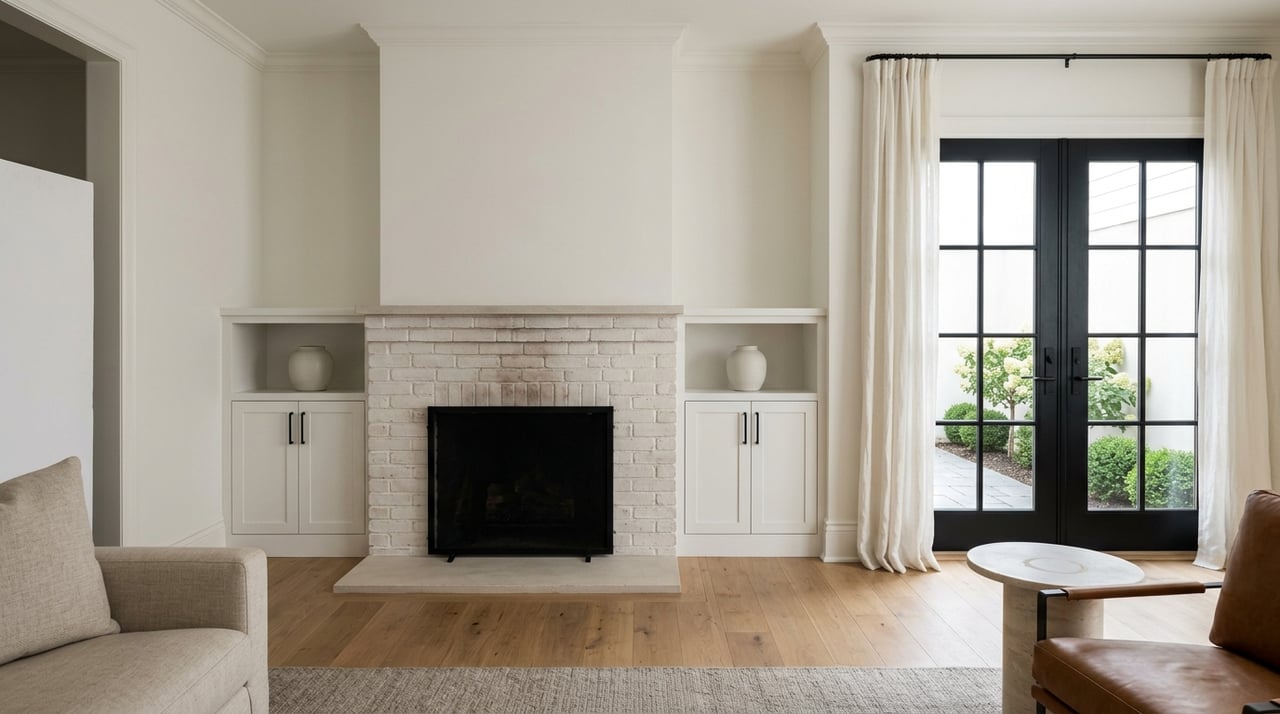
Vintage Vs Newer Homes In LaGrange: A Buyers Guide
July 9, 2026
July 9, 2026
Shopping in La Grange means you may face a classic real estate question right away: do you want the charm of an older home or the ease of something newer? It is a meaningful choice, especially in a village where historic homes, in-town townhomes, and custom newer builds can all sit within the same broader market. If you are weighing both options, this guide will help you compare character, layout, upkeep, location, and budget so you can decide what fits your life best. Let’s dive in.
La Grange is a compact west suburban village about 13 to 14 miles from downtown Chicago. It has two Metra stations and a downtown core the village describes as the heart of the community. That mix of commuter access and an active in-town setting is a big reason buyers are drawn here.
The housing stock is still led by single-family homes. In 2024, 65.3% of La Grange housing units were single-family homes, while 16.7% were condominiums, 6.4% were two-to-four-unit buildings, and 11.6% were buildings with five or more units. That gives you a market with variety, but one where detached homes still define much of the buyer conversation.
Price points also cover a wide range. Current market references place La Grange around a $581,617 median list price on Zillow, a $567,000 median listing price on Realtor.com, and a $594,300 median owner-occupied home value in Census QuickFacts. The village also describes its housing stock as primarily quality single-family homes ranging from about $350,000 to more than $1 million.
If you picture La Grange and immediately think of tree-lined streets, front porches, and architecture with personality, you are likely thinking about its older housing near downtown. Homes in the older sections date from the late 19th century to the early 20th century, and the historic district was added to the National Register of Historic Places in 1979. Some downtown buildings date to the 1890s.
Vintage homes here are not all one look. The village notes that the historic district includes a variety of late-19th- and early-20th-century architecture, and current examples include Victorians, American Four-Squares, and prairie-influenced colonials. For many buyers, that variety is a major draw because it offers stronger architectural identity than a more standardized newer build.
Location also plays a big role in the appeal. Older homes near downtown are often valued for walkability, access to the train, and proximity to the village core. Recent listing examples highlight being one block from downtown or just blocks from the train and downtown, which tells you how central location can be to the value story.
Older homes in La Grange often offer details that are hard to recreate. Features highlighted in current examples include front porches, grand staircases, pocket doors, leaded glass, and separate formal and informal living spaces. If you want a home that feels distinct from the moment you walk in, this can be a powerful advantage.
You may also find larger lots or homes with a stronger street presence depending on the block and the property. In many cases, buyers are not just choosing square footage. They are choosing setting, design, and a home with a story.
Charm usually comes with more maintenance planning. Older homes often need closer review of insulation, windows, and basement water management. The Department of Energy notes that older homes often have less insulation than homes built today, which is why air sealing and window upgrades or storm windows are common improvement projects.
In La Grange, due diligence on older systems matters even more. The village is actively replacing lead service lines and offers a sewer-backup prevention grant that is not available for new construction homes. If you are considering a vintage home, it is smart to ask whether the sewer line, lead service line, and basement drainage have been checked.
Newer construction in La Grange tends to show up as infill homes, build-to-suit opportunities, and planned developments rather than large subdivision-style neighborhoods. One example is Mason Pointe, which was approved by the village in 2019 as a development planned for 12 single-family homes and 58 townhomes. That gives buyers a newer option without leaving the in-town feel many people want.
A lot of newer product in La Grange is still relatively walkable. Current examples include a 2020 Mason Pointe townhome and newer in-town builds on Bluff Avenue and North Stone Avenue. So if you want newer construction, you may not have to give up convenience to downtown or the train.
Newer homes usually focus on how people live today. Common features in current listings include open kitchen and family room flow, lofts, garage parking, en-suite bedrooms, upper-level laundry, mudrooms, and basement expansion potential. If your priority is function and ease, newer homes often deliver that right away.
Energy performance can also be a plus. New-home listings in La Grange market whole-home building standards, energy-saving features, and warranty coverage, and village code requires compliance with state and local codes, including the state energy code. The Department of Energy also notes that insulation is more cost-effective to add during construction than to retrofit later.
For some buyers, lower day-to-day exterior upkeep is another big benefit. One current townhome example includes an HOA that covers exterior maintenance, lawn care, and snow removal. That kind of setup can be attractive if you want a more lock-and-leave lifestyle.
Newer does not always mean simpler across the board. If you are looking at a townhome or planned development, you need to understand the HOA. Ask what the monthly fee covers, what exterior items the association maintains, and whether there are any rules that affect your use of the property.
You should also keep expectations realistic about style and setting. Newer homes may offer better flow and efficiency, but some buyers feel they trade away the architectural detail and individuality that make older La Grange homes stand out. The best fit depends on whether you value convenience or character more.
Here is the simplest way to frame the decision: vintage homes tend to win on character, while newer homes tend to win on function. In La Grange, both can offer strong location, but they serve different buyer priorities.
| Factor | Vintage Homes | Newer Homes |
|---|---|---|
| Architecture | Distinctive historic styles and original details | Contemporary design and cleaner lines |
| Layout | More likely to have separate living spaces | More likely to have open-concept flow |
| Maintenance | Often needs closer review and updates | Typically more predictable day-to-day upkeep |
| Energy Efficiency | May need insulation or window upgrades | Often built with current energy standards in mind |
| Walkability | Common near downtown and train | Possible in newer in-town developments |
| Ownership Costs | Repair planning may be higher | HOA fees may apply in some communities |
One of the biggest mistakes buyers make is assuming older means cheaper or newer means more expensive. In La Grange, the numbers show it is not that simple. Age is only one piece of value.
Recent examples of vintage homes range from about $716,000 to $1.275 million, while newer options include townhome product in the mid-$600,000s and custom new builds around $1.5 million. In practice, price often reflects location, lot size, architectural significance, and renovation quality as much as the year built.
That is why a side-by-side comparison matters so much. Two homes may look very different on paper, but the better value depends on what updates have been done, how the space lives, and what your long-term ownership costs may look like.
The right home usually becomes clearer when you focus on how you want to live, not just what looks best online. Start by thinking about your daily routine, your comfort with upkeep, and whether you prefer distinctive design or move-in-ready efficiency.
A vintage home may be the better fit if you want:
A newer home may be the better fit if you want:
No matter which direction you lean, asking the right questions can protect your budget and help you compare options more clearly.
For a vintage home, ask about:
For a newer home, ask about:
In a market like La Grange, the details behind the listing matter. A beautiful older home may have excellent updates that reduce near-term costs, while a newer property may carry HOA terms that change the ownership picture. The smartest decision usually comes from understanding not just the home, but the tradeoffs behind it.
That is where local guidance can make a real difference. When you have a team helping you compare architecture, condition, location, and long-term value, you can make a decision with more confidence and fewer surprises.
If you are trying to decide between a vintage home and a newer build in La Grange, Wardlow Group can help you compare your options, understand the market, and find the right fit for how you want to live.
Stay up to date on the latest real estate trends.

Did You Know? New Construction Communities Are Also Available Within Downers Grove District 99!

Selling in Downers Grove? 7 Questions to Ask Before Hiring a Realtor

How to Choose the Best Realtor in Downers Grove, IL

Beyond Luxury and New Construction: Why Experience Selling Every Type of Home Matters
Why a Lifelong Downers Grove Realtor Can Make a Difference

Why The Wardlow Group Helps Buyers Write Offers That Get Noticed—and Accepted

Downers Grove Real Estate Market Guide 2026
Etiam non quam lacus suspendisse faucibus interdum. Orci ac auctor augue mauris augue neque. Bibendum at varius vel pharetra. Viverra orci sagittis eu volutpat.